
1st International Conference on Family Science 2026, Munich
Families and Challenges in Evolving Societies
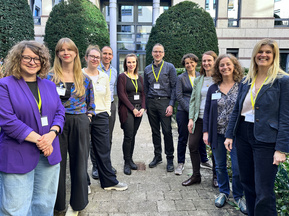
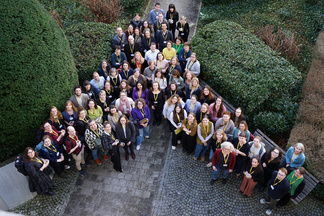
In February 2026, the first-ever joint “International Conference on Family Science” on Families and Challenges in Evolving Societies which followed a vibrant one-day PhD workshop (pdf). The event was hosted by the German Youth Institute (DJI) in Munich, and drew nearly 90 researchers from across Europe, fostering lively exchanges on family relations and structures, gender, parenting and child well-being, and the interplay between family transitions and economic outcomes (see conference report by Charline Bohm and Isabel Gebhardt in ZSE - Zeitschrift für Soziologie der Erziehung und Sozialisation 3/2026).
The event was enriched by two outstanding keynote speeches: Prof. Ulrike Zartler (University of Vienna) offered valuable insights on publishing in family journals during the PhD workshop, while Prof. Charlotte Faircloth (University College London) delivered a compelling talk on contemporary intensive parenting practices. All presentations and discussions (pdf) were both engaging and thought-provoking, contributing valuable perspectives to the evolving field of family research.
Our heartfelt thanks to the hosting institution, DJI, specifically Claudia Zerle-Elsäßer, Laura Castiglioni, and their hands-on support staff, and to all participants for making this first edition such a memorable success.
We look forward to building on this momentum in the years ahead!

Gallery 2026
-
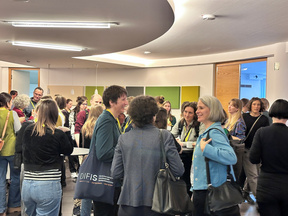 Inge Kraus / DJI
 -
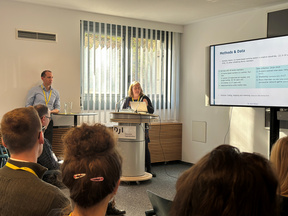 Inge Kraus / DJI
 -
 Inge Kraus / DJI
 -
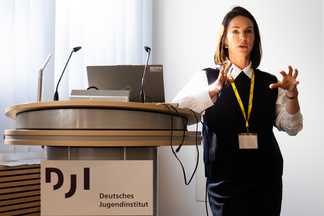 Inge Kraus / DJI
 -
 Inge Kraus / DJI
 -
 Inge Kraus / DJI
 -
 Inge Kraus / DJI
 -
 Inge Kraus / DJI
 -
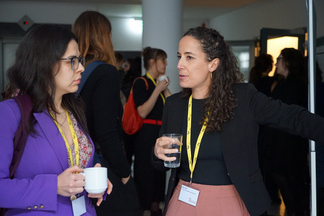 Inge Kraus / DJI
 -
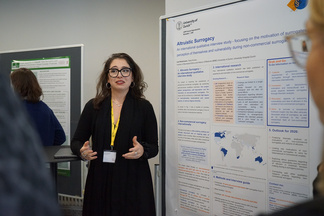 Inge Kraus / DJI
 -
 Inge Kraus / DJI
 -
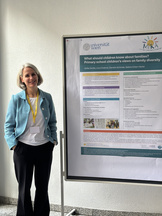 Inge Kraus / DJI
 -
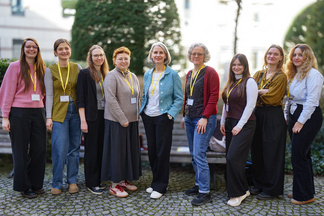 Inge Kraus / DJI


Organizing Committee
Ayhan Adams (University of Osnabrück)
Laura Bernardi (University of Lausanne/LIVES)
Laura Castiglioni (German Youth Institute, DJI)
Bettina Hünteler (German Institute for Economic Research, DIW Berlin)
Anne-Kristin Kuhnt (University of Rostock)
Bernhard Riederer (Austrian Academy of Sciences)
Julia Sauter (University of Lausanne/LIVES)
Eva-Maria Schmidt (University of Vienna/OIF)
Claudia Zerle-Elsäßer (German Youth Institute, DJI)
Gundula Zoch (Carl von Ossietzky University Oldenburg)

Programme
The Conference Programme and the Book of Abstract (pdf) is also available to download.
Thursday 26th Febuary 2026
| Time | Session | ||
|---|---|---|---|
| 09.00 | Registration and gathering | ||
| 09.30 | Opening and welcome | ||
| Childcare, Employment, and Partnership Session 1A Chair: Ayhan Adams | Generations Session 2B Chair: Bettina Hünteler | ||
| Estimating the Effect of Working From Home on Parents’ Division of Childcare and Housework: A New Panel IV Approach (Schüller) | Social Inequalities in Support Between Multiple Generations in Europe Over Time (Deindl) | ||
| Fathers’ and Mothers’ Joint Longitudinal Earnings Trajectories Before and After First Birth in Austria (Vargha et al.) | Simulating the Historical and Future Availability of Living Ancestors Throughout the Life Course, 1751–2100 (Calderón-Bernal) | ||
| The Interplay of Childcare Histories and Maternal Work Trajectories (S. Schmid et al.) | Uncovering Hidden Kin: Cross-National Evidence From KINMATRIX (Jessee et al.) | ||
| Dense Intimate Knowledge: Conceptualising the Co-Presence of Work and Family in the Home (Mikats) | |||
| 11.15 | Coffee break and change of rooms | ||
| 11.45 | Keynote What is ‘intensive parenting’ and why does it matter? Charlotte Faircloth | ||
| 12.45 | Lunch | ||
| 13.45 | Parallel-Sessions | ||
| 13.45 | Parenthood, Care Work, and Well-being Session 2A Chair: Gundula Zoch | Mental Health and Stress Session 2B Chair: Eva-Maria Schmidt | Wealth and Property Session 2C Chair: Bettina Hünteler |
| Experiencing the Demands of Parenthood: How Unpaid Care Work Shapes Parental Well-Being in Germany (Löwe) | Mental Health in Adulthood After Prenatal Exposure to Maternal Stress Due to Sudden Loss of Close Relatives (Broos et al.) | Family and Reproductive Welfare Across Europe (Zagler et al.) | |
| Caring for Summer? Seasonality of Fathers’ Paternity Leave Take-Up in Germany (Filser et al.) | Do I Care? Maternal Self-Care During the COVID-19 Pandemic in Austria (Dafert) | Forgotten Property: Operationalizing Couple-Specific Property Arrangements for Standardized Surveys (Eichhorn et al.) | |
| Who Cares for a Sick Child? The Role of Job Characteristics in Germany (Klennert et al.) | Disappointed Believers Suffer More: How Marriage Permanence Beliefs Shape Depressive Symptoms After Separation and Divorce (Philipp et al.) | Social and Material Participation of Children in Low-Income Households in Germany – a Mixed-Methods Research Project (Globisch et al.) | |
| Take it or leave it? Factors for fathers’ parental leave take-up in Germany (Bächmann et al.) | Unequal Happiness Gains From Summer Breaks: Evidence From European Parents (Rotondi) | From Separate to Shared: Marriage Beliefs, Homeownership, and Couples’ Money Management (Althaber et al.) |
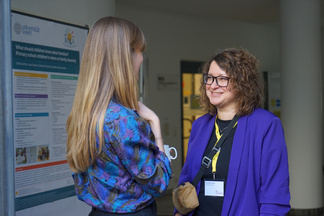
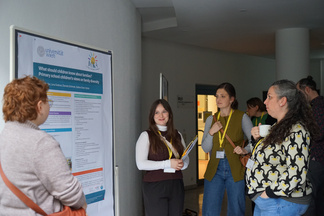
| 15.15 | Session Posters and Coffee: Families' diversity |
| Non-commercial Surrogacy. An international qualitative interview study (Heistrüvers) | |
| Queer Family Formation in Germany: Acceptance of Egg Donation for Female Same-Sex Couples (Kuhnt et al.) | |
| What should children know about families? Primary school children’s views on family diversity (Zartler et al.) | |
| Preparing for worst: Marriage Insurance and Labour Supply (Usman) | |
| The Politics of Parenthood: How Family Roles Shape Support for Equal- Opportunity Education Policy (Lütolf et al.) |
| 16.15 | Partnership and Migration Session 3A Chair: Eva-Maria Schmidt | Poverty and Inequality Session 3B Chair: Bernhard Riederer | Relationships in and of families Session 3C Chair: Julia Sauter |
| Partnership Trajectories Among Refugee Women and Men: Exploring the Role of Gender and Country of Origin (Kraus et al.) | The Education-Specific Impact of First Birth on Poverty Risk Within Couples in Austria (Siegert et al.) | Digital Transformation and the Family: Is Digital Communication a Benefit or a Threat to Parent–Child Relationships? (Mellies et al.) | |
| Mixed Unions as Boundary Breakers? How Choosing Migrant Partners Affects German Non-Migrants’ Family Ties (Gawron et al.) | The social gradient in infant health from a couple-level perspective: Revisiting the heterogamy penalty hypothesis (Metzger et al.) | Stability and Change in Sibling Relationships in Childhood: Latent Profiles and Transitions (Wittmann) | |
| Navigating Norms: How Mothers in Transnational Child Custody Conflicts Negotiate Normative Ideals About Motherhood (Kiermaier et al.) | “I Can’t Relate to You!” Children’s Subjective Poverty Experience and Their Perceptions of the Parent–Child Relationship in Germany (Stein) | The Family–Childhood Nexus in Home–School Relations (Eunicke) | |
| “You Really Notice Which Other Realities of Life Exist That Are Not Foreseen”: Legal Professionals’ Views on Transnational Families in Child Custody Conflicts (Parisot et al.) | Partnership Status and Parental Support: Evidence of Compounded Disadvantage Across European Welfare Regimes (Corradi-Eiger) | ||
| 17.45 | Break and change of rooms | ||
| 18.00 | Dinner at DJI | ||
Friday 27th February 2026
| 09.00 | Norms and Emotions Session 4A Chair: Gundula Zoch | Couple Separation and Ageing Session 4B Chair: Ayhan Adams | Power relations in families Session 4C Chair: Laura Bernardi |
| From Tradwives to Egalitarians: Ideologies on the Female Role and Their Relevance for Political Preferences (Kleinschrot et al.) | Men’s Employment Trajectories After Union Dissolution in Germany (Schmauk et al.) | Doing Democracy in Families: Fathers, Teens, and the Practice of Democracy at Home (Possinger et al.) | |
| Beyond Adolescence: Exploring Value Similarities Between Parents and Adult Children (Becker) | Who Converges to Whom? Divorce Patterns Across East, West, and Migrant Populations More Than 30 Years After German Reunification (Kleinschlömer et al.) | Sexual Autonomy and SDG 5.6.1: International Comparison and Regional Determinants (Shapoval et al.) | |
| Emotion Work in Early Motherhood: Practices and Challenges in Navigating Societal Expectations (Schmidt et al.) | The Timing of Labor Market Exit and Pension Claiming: The Role of Migration Status and Gender in Germany (Sauer et al.) | “Abuse Was in the Room”: Gender-Specific Gaslighting in Couples, Family and Parenting Counselling (Burschel) | |
| Becoming Parents, Becoming Egalitarian? How Couples’ Gender Ideologies Shift With Parenthood in Australia, Germany and Switzerland (Florean et al.) | Dyadic Aging: Health, Autonomy, and Death in Older Couples (Klingel) | ||
| 10.30 | Coffee brake and change of rooms | ||
| 11.00 | Child Well-Being in Separated Families Session 5A Chair: Bernhard Riederer | Parenting Practices and Inequality Session 5B Chair: Julia Sauter | Family Diversity, Attitudes and Inequality Session 5C Chair: Anne-Kristin Kuhnt |
| Child Well-Being in Separated Families: How Are Stability and Change in Post-Separation Care Arrangements Linked to Emotional Problems in Germany? (Recksiedler et al.) | Parenting Practices and Self-Efficacy in Children and Adolescents (Weis et al.) | Attitudes Toward Family Diversity: A Systematic Review and Conceptual Framework of Structure and Composition (Hoffman et al.) | |
| Prevalence and Characteristics of Custody Arrangements in Switzerland (Spasic) | Class Inequality in Parental Activities With Children Among Dual-Earner Couples: Evidence From the 2022 German Time Use Survey (Naujoks et al.) | Challenges of Established Gender and Parental Roles in Evolving Societies: The Non-Birthing Parent in Lesbian–Queer Family Constellations (Zimmermann et al.) | |
| Good Mother, Good Father: Constructions of Parenthood in the Discursive Field of Custody Proceedings in Austria Since 1945 (Zuccato- Doutlik) | U.S. Parenting Norms in Europe? A Replication and Extension of Ishizuka (2019) in Switzerland (Klingler et al.) | LGBTQ+ Families Navigating Inequalities, Normalization, and Struggles for Recognition (Teschlade et al.) | |
| Parent–Child Discrepancies in Children’s Well-Being Between Nuclear and Post-Separation Families (Brocker) | Who Decides? The Dyadic Significance of Parental Attitudes for Children’s COVID-19 Vaccination Uptake (Trübner et al.) | Sexual Minority Orientation and Singlehood: A Double Jeopardy for Life Satisfaction? (L. Schmid et al.) | |
| 12.30 | Lunch | ||
| 13.30 | Fertility: Attitudes, Intentions, Realisation Session 6A Chair: Laura Bernardi | Gender Ideology and Division of Work Session 6B Chair: Anne-Kristin Kuhnt | |
| Attitudes Toward Having Children: What Is the Role of Gender, Migration Background and Religion? (Jahr et al.) | Multidimensional Gender Ideology Measures and Their Relation to the Division of Unpaid Labor (Firl) | ||
| From the Desire to Have Children to Having Children: Urban–Rural Differences in Realisation (Riederer) | Effects of Actors’ and Partners’ Transitions to Permanent Employment on Subjective Well-Being (Baron) | ||
| Occupational Stressors, Perceived Stress, and Women’s Fertility in Germany (Luo et al.) | Stalled Gender Revolution? Longitudinal Patterns of Paid and Unpaid Labour in Swiss Dual-Earner Couples (Bonelli et al.) | ||
| The Role of Societal Pessimism in Childfree Rationales: Quantitative and Qualitative Insights from the Netherlands (Cammu et al.) | Gender Differences in Social Integration: The Role of Paid Work (Braack et al.) | ||
| 15.00 | Closing remarks and end of the conference | ||